Home / Work / Ardell & Sons Masonry
Sample project: Heritage style
A three-generation firm that finally looks its age, in a good way
Sample project. Ardell & Sons Masonry is a made-up restoration firm. The live sample is a full one-page site.
A Baltimore masonry restoration firm founded in 1958, now run by the founder's grandsons. Their reputation is excellent and their website is a phone number on a white page.
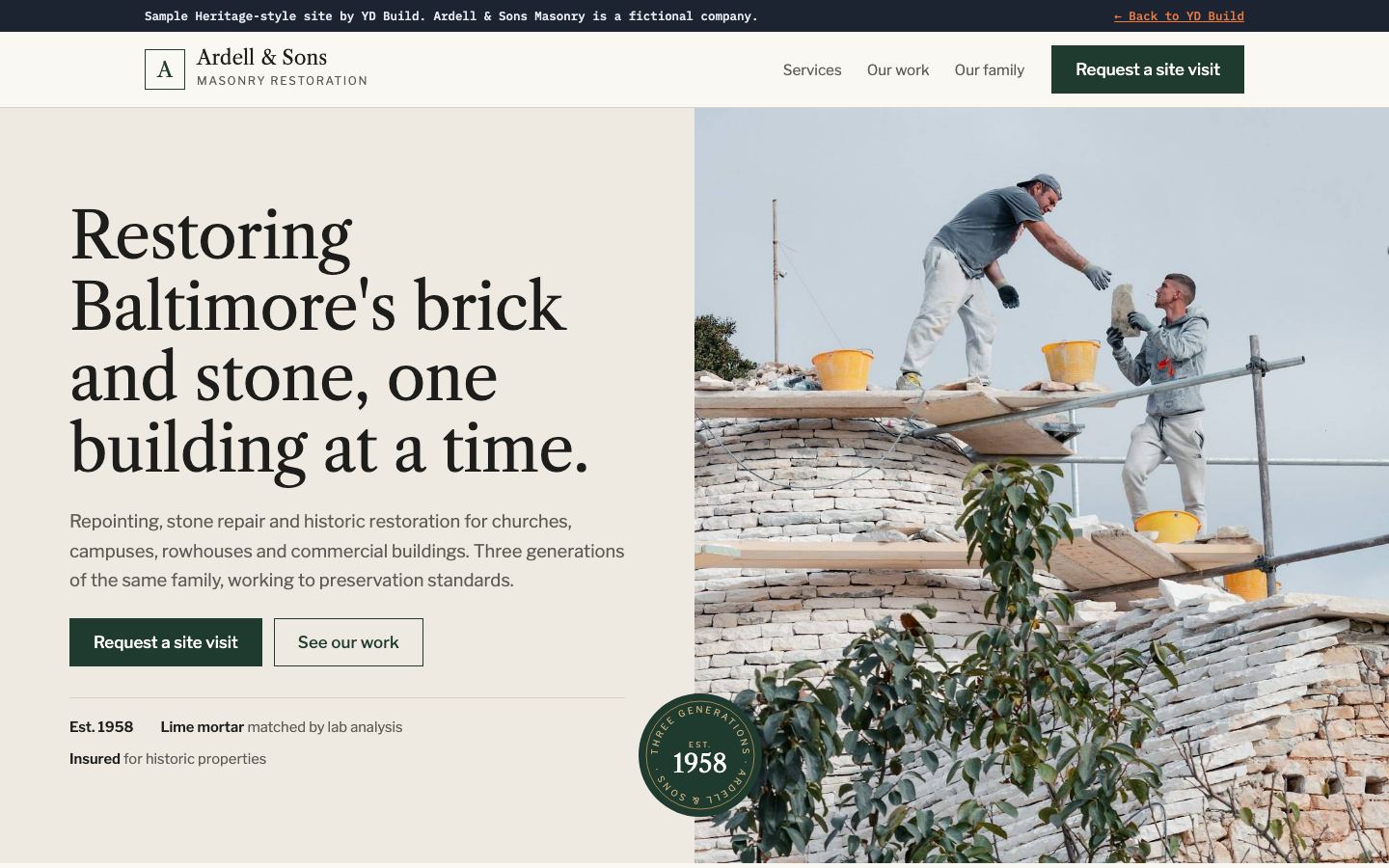
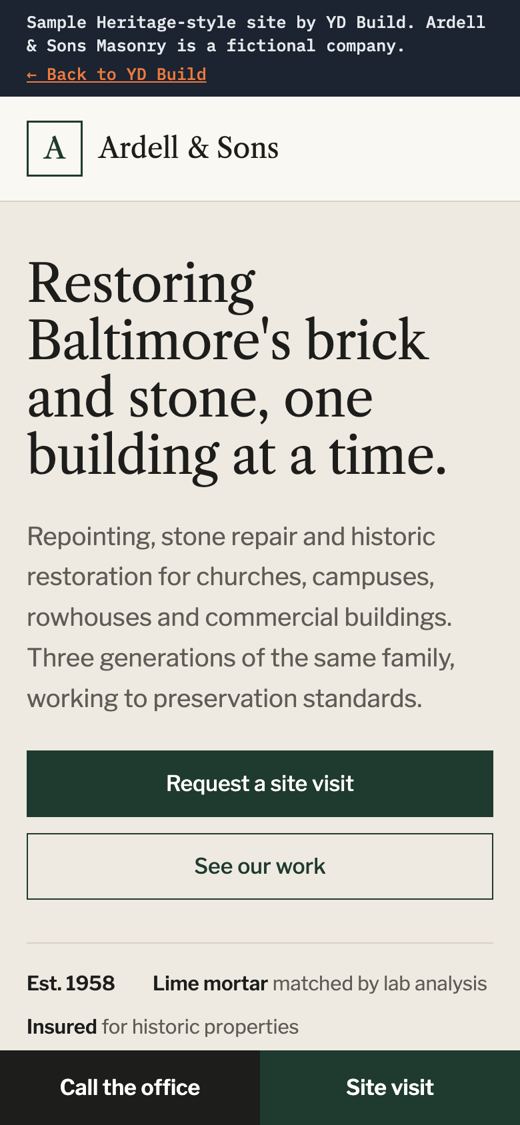
Homepage on desktop and phone.Open the live sample
The brief
Who they are
Third-generation restoration masons: repointing, stone repair, historic brick and steeples.
Who checks them out
Church facilities committees, campus planners, preservation architects and owners of historic homes.
What the site has to do
Show they work to preservation standards, show the history, and book site visits.
Decisions and why
Every choice on the page answers a question this client's buyers already have.
- Color
Forest green, aged brass and limestone. The colors of patina, bronze plaques and cut stone. They tell a church committee the firm will still be around in 20 years.
- Type
Libre Caslon with Libre Franklin. Caslon is the typeface the Declaration of Independence was first printed in, and Franklin Gothic is classic American signage. Both are free revivals, and together they read as established without being fussy.
- Layout
An Est. 1958 seal and a generations timeline. For this firm the history is the product, so it gets its own visual instead of a line on an About page.
- Content
Write-ups that name the standard. Each project lists scope, duration and the preservation standard followed, which is what review boards and architects look for.
What's on it
- A promise rooted in the city, with the founding year in the first screen.
- Services explained, including why lime mortar matters on old buildings.
- A featured project write-up with scope, duration and the standard followed.
- A three-generation timeline that turns the family story into proof.
- A site visit request that asks about the building, not just a name and number.
- Call and site visit buttons pinned to the bottom on phones.
How we'd know it's working
What we'd track for the first 90 days after launch.
Requests per month from the form, and how many become proposals.
Inquiries from churches, campuses and architects, tracked by building type.
Whether committees actually read the write-ups before reaching out.
Decades of good work and no website to show it?
Send me what you have, even if it's photos in a drawer, and I'll show you what I'd build.